
Posted on Tuesday, December 9, 2025


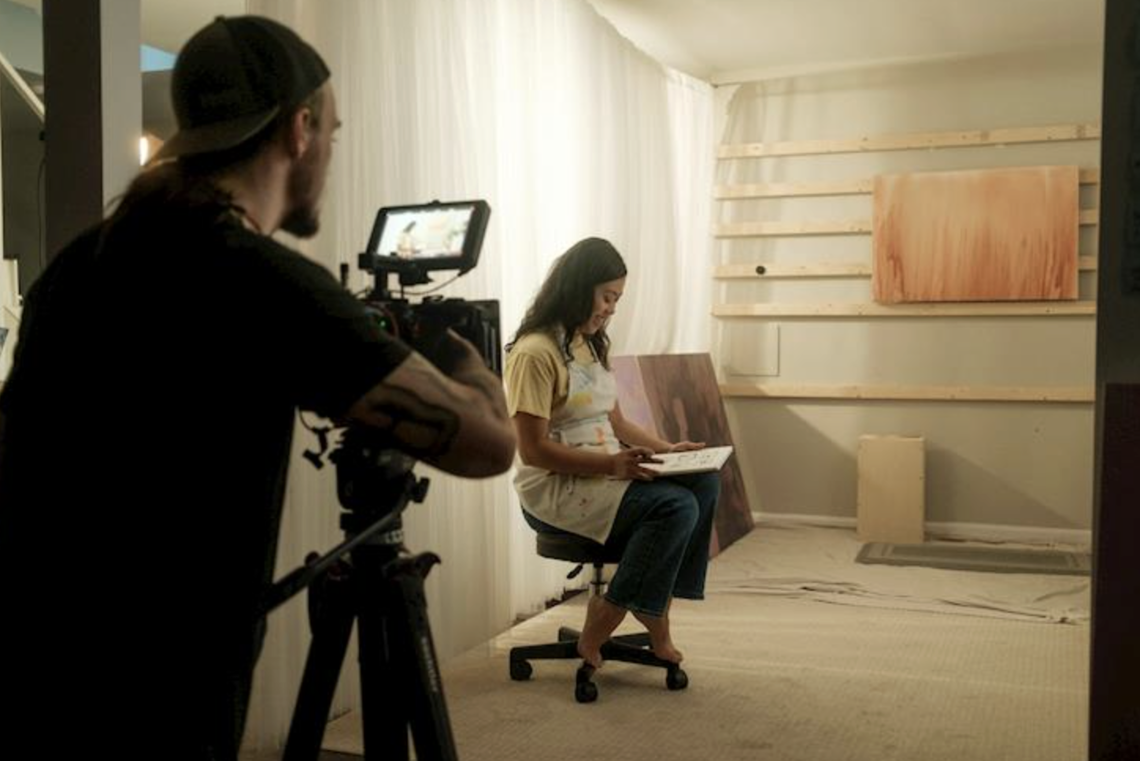
When cinematographer Josh Hendrix pivoted from a nonprofit background to full-time freelancing, he found himself navigating two dramatically different film markets at once—Louisville’s quiet, accessible charm and Atlanta’s high-energy creative saturation. What began as a temporary plan after an unexpected layoff quickly evolved into a thriving, multi-market career shaped by a human-first storytelling ethos and early momentum from ProductionHUB leads. Today, Hendrix operates dual profiles, shoots consistently in both cities, and has built a reputation for documentary-driven visuals that feel intimate, honest, and grounded in real people. In this interview, he shares the mindset shifts that stabilized his career, what separates freelancers who simply stay “busy” from those who build longevity, and why expanding his visibility across Louisville and Atlanta opened doors to projects with brands like Converse, Adobe, and Apple.
PH: You’ve built a thriving freelance career across two very different markets—Louisville and Atlanta. What makes each market unique, and what types of projects are currently driving opportunities where you work?
Josh Hendrix: Louisville and Atlanta are both great markets for video production in very different ways. Atlanta has a raw creative energy that’s hard to match, but it is also a much more saturated market. Louisville has a quieter beauty with horses, bourbon, and the small-town aspects. Louisville’s location also makes it easy to pick up work in Cincinnati, Indianapolis, or Nashville and still be home for dinner. Having roots in both lets me pull from the strengths of each and meet even more people.
PH: Your early career in nonprofit storytelling clearly shaped your creative lens. How does that foundation continue to influence the way you frame, light, and capture people today?
Josh Hendrix: Nonprofits were my gateway into the field for almost a decade. Budgets were small, but the people were passionate, and that taught me that storytelling is always human first. That mindset still drives everything. The shots matter, but the reason behind them matters more.
PH: You’ve described the transition from unemployment to self-employment as a pivotal moment. What mindset shifts or practical steps helped you stabilize your career during that period?
Josh Hendrix: My transition to self-employment wasn’t planned. I got laid off and only had a few freelance gigs lined up. I figured I’d use these gigs as a stopgap until I found what's next.
What I ended up finding was that I really loved being part of many different projects, and with ProductionHUB leads and some word of mouth, I had built up enough work to make the mental shift from being “unemployed” to being “self-employed.” That moment was when I knew I was doing what I wanted to be doing. PH: You’ve said ProductionHUB is a big reason you’re thriving as a DP today. What were the first signs that the platform was becoming a reliable pipeline for steady work?
Josh Hendrix: I didn’t even know ProductionHUB existed until a DP friend, Chris Dowell, told me shortly after going freelance. Within a couple of months, I was booking regular projects, and a few of those turned into long-term clients. While steady work isn't guaranteed, it showed me that it was a vital part of my freelance career. Without the early push ProductionHUB gave me, I probably would’ve ended up back in a 9 to 5 and missed out on so many great stories.
PH: For freelancers who feel discouraged or aren’t seeing traction yet, what are your top tips for building a strong ProductionHUB presence that actually leads to bookings?
Josh Hendrix: I think all freelancers feel discouraged at some point in their journey. The industry is always shifting, budgets rise and fall, and making new connections can be tough. ProductionHUB helps by giving you a platform to put yourself in front of the people who actually need your work.
The strongest part of that is your reel, but it can’t just be a random mix of footage. It has to be tailored to the work you want. I work primarily in the documentary space, so my reel is built around documentary work. It wouldn’t make sense for me to include event coverage or narrative pieces when that’s not what I’m trying to book. The other part of it is that the featured profile feature puts your profile front and center when potential clients are looking to hire. Sometimes being the first name in a producer’s head is the best way to get hired.
PH: You operate two profiles—Louisville and Atlanta. How has that strategy expanded your reach, and what advice would you give to freelancers considering multi-market visibility?
Josh Hendrix: For the first two years, I only ran a profile out of Louisville, but being an Atlanta native and knowing how much talent and story live in that city, I wanted to do more work there. It also gave me an excuse to see friends and family.
It’s more work and more money to have both profiles, but being seen is the first step to getting hired. Since activating that profile, I’ve had the privilege of working in Atlanta multiple times, including projects for companies such as Converse, Adobe, and Apple. PH: You’ve mentioned that even your corporate work leans documentary. What draws you to doc-style storytelling, and how do you bring emotional authenticity into branded environments?
Josh Hendrix: It always comes back to people. I tune out a lot of overly corporate-driven media online, and I’m sure most people do with how much of it is out there. In docu-style work, the people lead the conversation, and it feels more like someone talking at your dinner table. You’re more inclined to listen, and to understand why they’re saying what they’re saying. That creates better stories and better engagement than a project that says “look at how great we are,” and instead shifts it to “look at how this actually affects someone.”
PH: Is there a recent project where you felt the collaboration, conditions, or constraints pushed your cinematography in a new or unexpected direction?
Josh Hendrix: Over the past year, I’ve made a deliberate effort to build a team that elevates the work. I’ve partnered with gaffers, sound ops, ACs, and others in the area who I trust, because a chain is only as strong as its weakest link. With more face time spent with clients, I’m not always able to dot every I and cross every T, so I have to trust the people I hire to set me up for success. That trust is a big reason we’re able to create something beautiful. Right now, we’re working on a series of mini documentaries for a large healthcare organization in Louisville, and the quality of that project is something I couldn’t achieve alone.
PH: You’re very open about rates and workflows, something the industry often keeps behind closed doors. How do you approach rate-setting in a way that’s both sustainable and fair?
Josh Hendrix: When I first went freelance, the hardest part was figuring out what comparable rates in the area actually were. Nobody wants to make that information public. After a lot of digging and talking with people in similar-sized markets, I landed on what I thought my rates should look like.
I started at 800 per day for labor and 100 per day for gear, but I eventually realized both were pretty low. I tried 850 and 300 and didn’t get any pushback. Now I’m around 1000 per day for labor, and because of the different camera packages I have access to, gear rates run from 300 to 500.
It’s trial and error, and what works in one market may not work in another. When I upped my rates the first time, I thought I would get pushback from everyone I quoted. But when that never happened, my metric for what was acceptable in the area changed, and so did my potential value.
PH: What gear choices or setups have become your “reliable workhorses” for docu-style shooting across varied environments?
Josh Hendrix: One of my first major purchases when I finally had the cash flow was a Sony FX9 and a Sony FX6. Both are great cameras to work with. The FX6 handles most of the quick-turn projects, while the FX9 is my go-to for broadcast gigs. About a year ago, a recurring client wanted to start shooting on Red, so I picked up a Komodo X. Every camera has its place. The most important thing is being comfortable enough with your gear that you can make it work in any situation. If you can’t, it’s probably not the right camera for that project.
Outside of that, I am a big fan of the easyrig for long days, but when it is too cumbersome for the day, or we need to run even lighter, I will use a cinesaddle/ratbag. I've shot for days before with just the FX6, a zoom lens, and a CineSaddle.
PH: How do you keep your reel fresh when you’re constantly working, especially when much of your footage lives with corporate clients or longer-form documentary teams?
Josh Hendrix: I try to refresh my reel at the beginning of every year. I don’t always replace every shot, but there’s always new work I want to highlight. The challenge comes when some of my higher-profile projects stay with the production companies that hire me, so I don’t always get access to the raws, if I get them at all. When that happens, I just make sure I have new and better personal work to pull from so the reel still grows and improves each year.
PH: What systems or habits help you maintain strong relationships with clients and turn one-off gigs into repeat partnerships?
Josh Hendrix: I learned at a young age that being the path of least resistance is often the best approach. From the first email to delivery, I try to make sure my clients feel comfortable and that the environment I bring to set is chill and nimble. Things can change at a moment’s notice, and if you aren’t flexible, people won’t want to work with you. Especially in documentary work, you are working with people who may not be comfortable around cameras, and so being able to bring a relaxing atmosphere is important.
Show up on time, do your job to the best of your ability, and make the person who hired you look good. That alone leads to a lot of callbacks.
PH: Many freelancers fear instability, especially in year one. What would you tell someone who’s on the fence about going full-time?
Josh Hendrix: Use the fear. It’s not going away. Years into freelancing, I still feel it from time to time. You’re putting yourself out there in a way most people never will. But you can use that fear as a catalyst to find new clients, new ideas, and figure out who you want to be in this freelance game. There’s no way around the fear; may as well put it to work.
PH: From your perspective, what separates freelancers who stay “busy” from those who build long-term, meaningful careers in cinematography?
Josh Hendrix: It all comes down to relationships. It’s not just what you do, it’s who you know. Some of my biggest clients came from word of mouth through people I wasn’t even close with, but they knew me as a person. Once you have someone’s trust, you can start pushing bigger ideas with bigger budgets. That’s when you stop being busy from one-off gigs and start being busy because you’re part of other people’s success.
PH: Looking ahead, what types of stories or creative challenges are you hoping to take on in the next year?
Josh Hendrix: Next year, I am hoping to do more work for myself. Last year, I had the privilege of making a short documentary, Wandering Daydreams: The Art of Makara Thach Sernett, as a personal project. It was shot with no budget and only 2 days of shooting, but it was a great stepping stone into producing bigger projects. 2025 didn't lend itself to being able to shoot much for myself, so I am hoping to do more in 2026.
While I don’t foresee a time when I don’t shoot, I want to be able to step back on some projects and focus on directing. To have more time to focus on what matters most to me, the human story.

Recent Blog Posts
Why Human-Centered Storytelling Matters Now More Than Ever: A Conversation with Sarah Nix-Ward
Posted on 12/2/2025
How ProductionHUB Helped DP Willie Shaw Land His Dream Shoots in Seattle
Posted on 11/25/2025
The Real Cloud Strategy in Post: Flexibility, Not Absolutes
Posted on 11/4/2025
The Cinebot Mini Goes Back To School
Posted on 10/21/2025
How Streaming and Hybrid Delivery Are Disrupting Traditional Broadcast Models
Posted on 10/14/2025

